
Preparing quotes
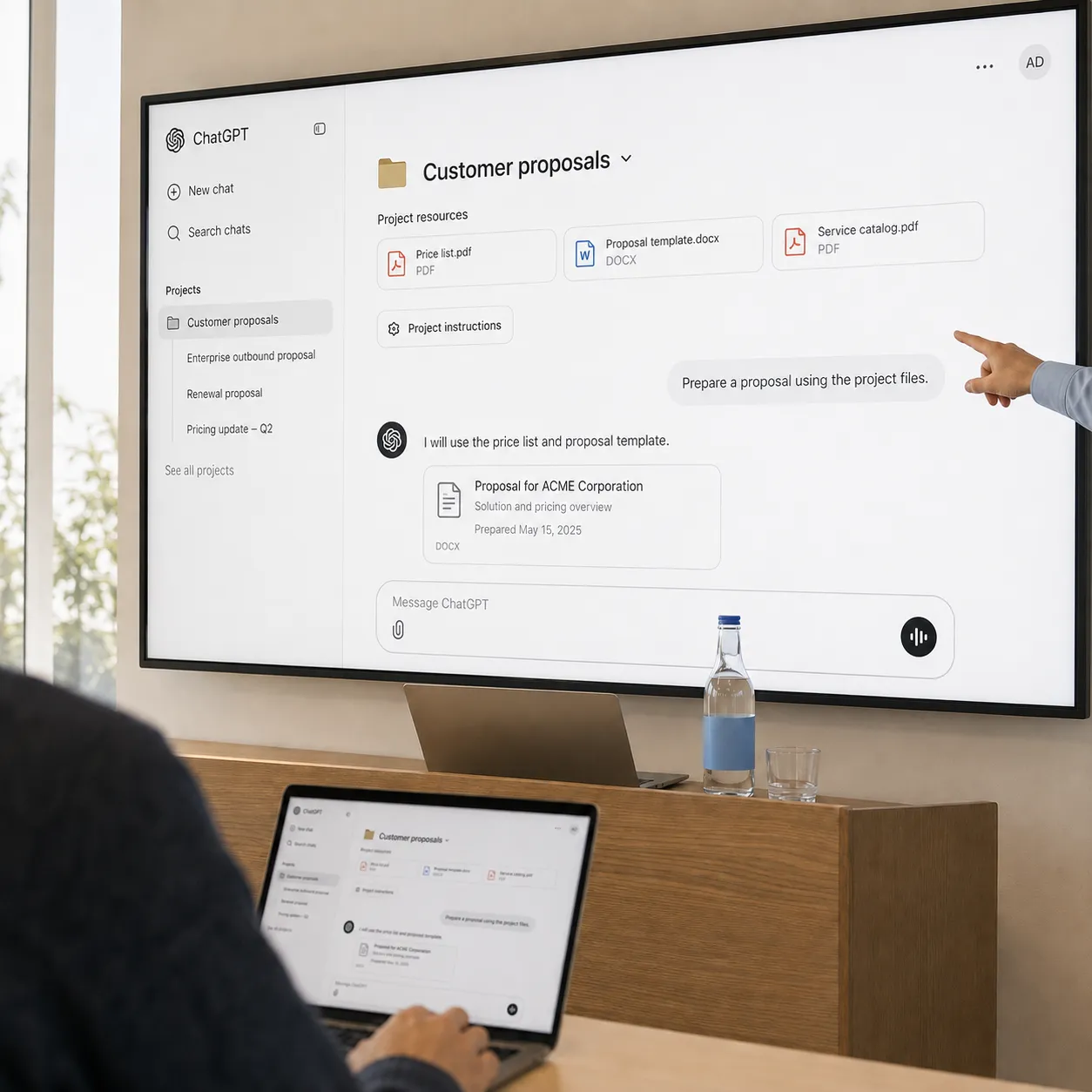
Gathering the necessary information, using price lists and templates, drafting and reviewing the quote, and preparing a document ready to send.
Not every workflow is suited to full automation, and handing an entire task over to AI isn't always the right approach. In complex workflows, employees contribute professional knowledge, experience, an understanding of the organisation, judgment and responsibility for the result. AI can complement these strengths by finding and analysing information, working with documents, preparing drafts, comparing alternatives, carrying out repetitive actions and checking the output against predefined rules.
Together, we'll build a workspace (project) for a real, recurring workflow in your organisation, using one of these options:
The workspace can include instructions, source documents, templates, examples, review steps and, where needed, connections to other systems. Alongside building a working process, we'll help employees understand how it is put together and develop the skills to create, implement and improve further workflows independently.
Many employees already use AI tools to write, summarise, find information or generate ideas. This is already useful, but it only begins to tap into what these tools can offer.
The training teaches employees how to take a real, complex task that recurs in the organisation and build a structured workspace for completing it. They define how the workflow should run, which information sources to use, what the output should look like, which checks are needed and where human judgment is required. This gives them a process they can reuse each time.
The greatest value comes from dividing the work well: deciding what the employee will do, what AI will do and where they'll work together. This makes it possible to complete complex tasks faster, more systematically and more consistently, while keeping employees' knowledge and judgment central to the work.

My name is Yaron Shaool. I'm 52 (but feel 32). I grew up on Kibbutz Revivim in southern Israel, and I'm married to Eleyor; together, we have four children. I have an MSc in industrial and management engineering (information systems) from Ben-Gurion University.
Over the past 25 years, I've worked in entrepreneurship, technology and venture management across several fields, including many years running an online business. In the past two years, I've founded two ventures built around AI systems: Safeion.ai and Whagentize.com.
My experience with technology and AI has strengthened my belief that personal connections, listening and trust are the foundation of successful work. I work directly with my clients to understand both what you're asking for and what your business goals are.
During the training, we'll learn how to:
Gathering the necessary information, using price lists and templates, drafting and reviewing the quote, and preparing a document ready to send.
Choosing a topic, gathering materials, writing a draft, adapting it to the audience, preparing images, running checks, setting up the newsletter in the email marketing platform, sending it and analysing the results.
Working with product details and images, preparing the title and description, adapting them to the store's structure, checking the information and publishing the product on the website.
Creating a core piece of content and adapting it to the format, audience and style of each social platform your business uses.
Reviewing the project backlog, tasks, staffing, inventory and constraints, comparing alternatives, preparing a work plan and assigning tasks to employees.
These are examples. We'll choose the training workflow based on your organisation's needs and the tasks your employees carry out in practice.
Before the training, we'll hold a short meeting with the responsible manager. We'll discuss who will take part, the tasks they perform, the tools they currently use and which workflow would be best for learning and practice.
After the meeting, I'll prepare a written proposal. Once it's approved, I'll review the relevant materials and examples and prepare the workspace for the training.
We'll use a case agreed on in advance to demonstrate the full process of building a workflow. At the end of the session, participants will choose another, relatively simple workflow, individually or in pairs, to practise on before the follow-up session.
After employees have tried the workflow in their day-to-day work, we'll meet again. We'll review their outputs, questions and any problems that came up, refine the instructions and explore ways to improve the workflow. This session helps turn the initial training into practical knowledge the team can continue using within the organisation.
If needed, we can arrange another in-person session for an additional fee. We'll review how the team has used the workflow over time, improve it and potentially start working on further workflows employees have identified themselves.
By the end of the process, your organisation will have:
My aim is to help employees understand how to work effectively with these tools and build knowledge and skills within your organisation that continue to develop after the training ends. Your team should be able to respond to new needs independently.
Pricing depends on the number of participants, the complexity of the chosen workflow, the training duration, the meeting location and any materials or system connections that need to be prepared. After the initial preparation meeting, you'll receive a written proposal covering preparation, the in-person training, the follow-up session and the materials prepared for your team.
Ready to give your team the skills to work independently with advanced AI tools?